About Karur District (Tamil Nadu)
Karur district is a district of Tamil Nadu state with its administrative headquarters located at Karur town. In many inscriptions and literature it is mentioned that earlier the place, Karur was popularly known by two names likewise Karuvoor and Vanji. Furthermore, the region had some other names also such as Adipuram, Tiruaanilai, Paupatheechuram, Karuvaippatinam, Vanjularanyam, Garbhapuram, Thiru vithuvakkottam, Bhaskarapuram, Mudivazhangu Viracholapuram, Karapuram, Aadaga maadam, Cherama nagar and Shanmangala Kshetram. In the foreign notices of Ptolemy, the name of the district was called Karoura meaning an inland capital of the Cheras. In the state of Tamil Nadu, Karur town is the oldest one. Since from the Sangams era, the place has been well known as a significant centre for trading. The contribution of this region in the history and culture of Tamil is remarkable. During the ancient and medieval periods, the region was under the rule of the Cheras, Gangas and Cholas. Cheras made Karur as their capital. Later the Nayakars followed by Tipu Sultan also ruled Karur. Then the British came and invaded Karur after destroying the Karur Fort during their war against Tipu Sultan in 1783. Thereafter Karur came under the British India and a part of the Coimbatore district and later Tiruchirappalli district. Karur was emerged as a separate district on 1st November, 1995.
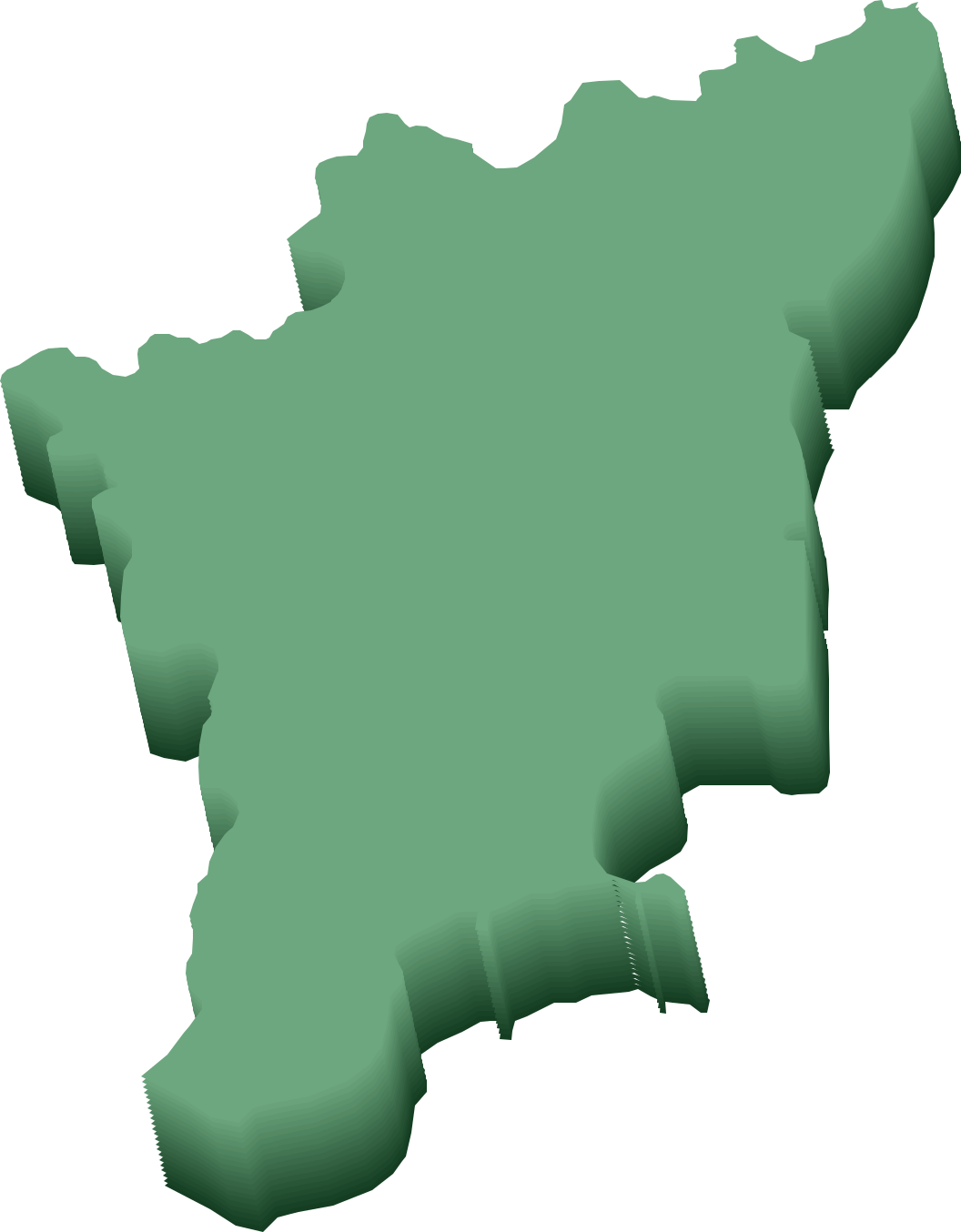
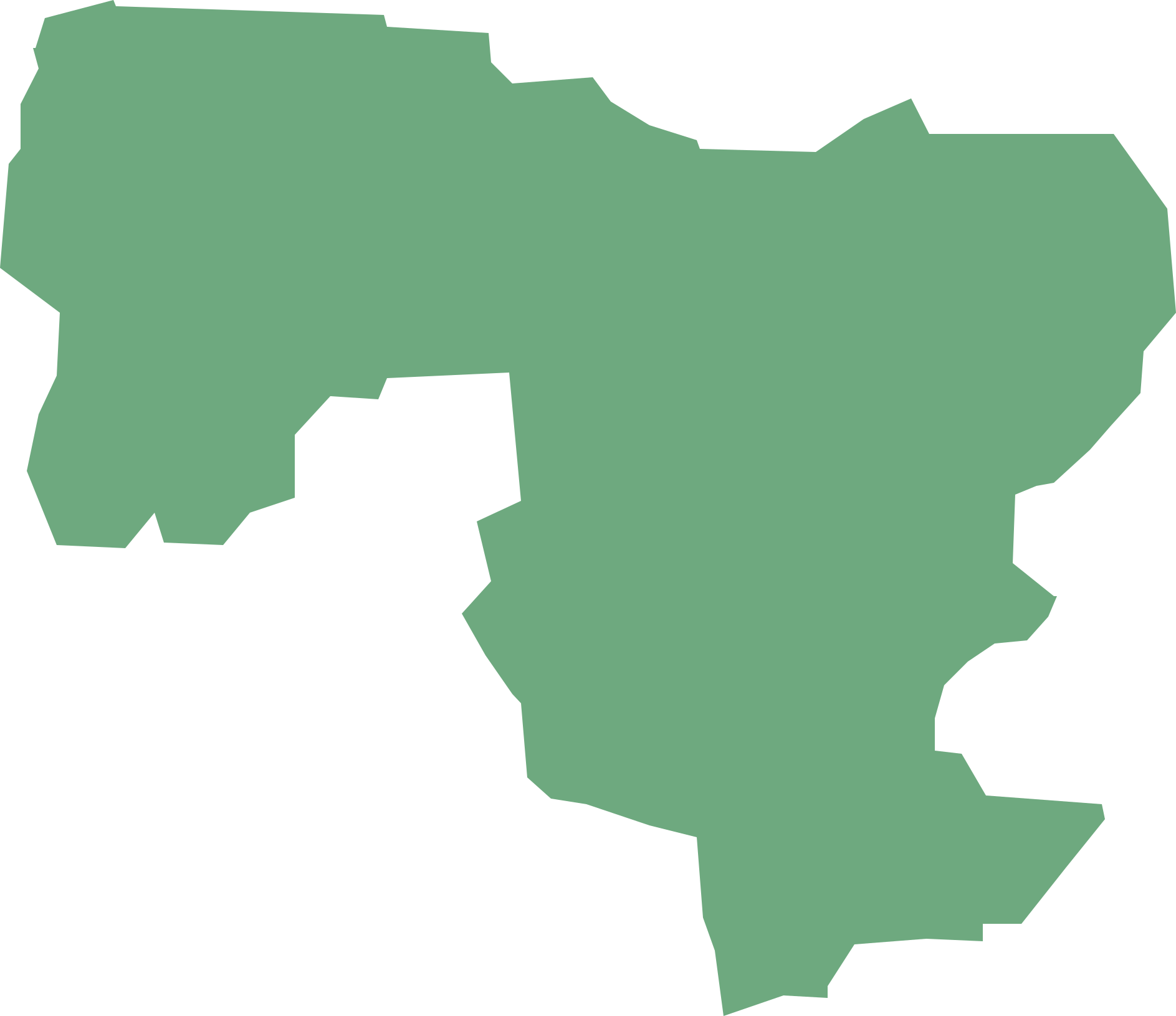
Geographically, the district lies at 10°96'N latitude, 78°08'E longitude and 122 m altitude. In the year 2023, there was a total 3.63% forest area of total geographical area. The district encompasses a geographical area of 2,904 sq. km. and it is bounded by Namakkal district on the North, Dindigul district on the South, Tiruchirapalli district on the East and Erode district on the West. Most of its rainfall occurs in the monsoon season. The actual rainfall in the district was 783.4 mm in the year of 2024-2025.
Administration wise, the district is divided into 6 talukas namely Aravakurichi, Karur, Kadavur, Krishnarayapuram, Kulithalai and Manmangalam. Moreover, it comprises 5 sub-districts, 19 towns and 170 villages. The administrative language in the district is Tamil.
According to 2011 census the district has a population of 10,64,493 out of which 5,28,184 are males and 5,36,309 are females. The district has a sex ratio of 1015 (females for every 1000 males). Furthermore, the district has projected population of 12,98,139 comprising 6,45,072 males and 6,53,067 females for the year 2026. According to the National Family Health Survey (NFHS-5, 2019–21), the district has an estimated sex ratio of 1,154 females and a child sex ratio of 947 females per 1,000 males. During the year 2001-2011 the population growth rate in the district was 13.77% including 13.46% were males and 14.07% were females. As per 2011 census the major religion in the district is Hindu with 93.35% of the total population. The population density in the district is 367 persons per sq. km. According to 2011 census the principal language in the district is Tamil with 91.95%. In the year 2023 the number of live births in the district was 13,107 out of which 6,716 were males and 6,391 were females. In the same year the number of deaths in the district was 10,629 out of which 5,961 were males and 4,668 were females.
The economy of the district is dependent on both the agricultural and industrial sectors. Most of the lands in the district are use for agricultural purposes. Black soil commonly found in this district is favourable for agriculture. The chief agricultural products in the district are paddy, banana, sugarcane, beetle leaf, grams, pulses, tapioca, groundnuts, oilseeds, tropical vegetables, garland flowers, medicinal herbs, etc. Industrially, also the district is quite well developed. Some of its prominent industries are home textiles, paper, cement, sugar jewellery, etc. The district is famous for its bus body building industry. The spare parts of bus manufactured in Karur are exported to the different parts of the country. In the year 2023-2024 the Gross Domestic Product in the district was Rs. 30,12,789 lakh at current price and Rs. 17,47,358 lakh at constant 2011-2012 prices. The Net Domestic Product in the district during the period 2023-2024 was Rs. 27,16,216 lakh at current price and Rs. 15,51,937 lakh at constant 2011-2012 prices. The Per Capita Income or NDDP, At Factor Cost in the district during the period 2023-2024 was Rs. 2,39,105 at current price and Rs. 1,36,615 at constant 2011-2012 prices.
The district is renowned as an abode of several reputed educational institutions. It provides a platform for higher education. As per 2011 census the literacy rate in the district is 75.6% including 84.54% are males and 66.86% are females. The total number of literates in the district is 7,27,044 out of which 4,01,726 are males and 3,25,318 are females. In addition, according to the Periodic Labour Force Survey (PLFS) for the period July 2023-June 2024 estimated literacy rate in the district is 88.53% including 94.92% are males and 82.24% are females (Age 7 Years and Above).
C. Muthuswamy Gounder, an eminent Indian politician who served as the Member of Parliament for Karur from 1967 to 1971 was born in the year 1917 at Karur town. He is a member of the Swatantra Party.
The district has several centres of attraction which allures many travellers from different parts of the country as well as world. Kalyana Venkattaramasami temple, located almost five km. away from Karur at Thanthoni is one of the most sacred places in the district. The deity of the Lord is placed on a raised portion of a hillock. The district of Karur is counted as one of the seven sacred sthalams or the places of Sivalayams. Pasupathieswarer temple is another prime temple in the district. In this temple, the group of sculptures signifying the Pasupathiswaralingam is very high i.e. five feet. Some other important places of interest in the district are Mayanur, Chettipalayam, Tirumukkudalur, Nerur, Kadavur, Manthirikonpatty, etc. During the year 2024 there were 23,42,777 domestic tourists and 294 foreign tourists who visited these places of the district.